Purpose. Who Gives A Crap
The statement on the wall
I was in a boardroom not long ago. On the wall, beautifully framed, was the company’s purpose statement. Commanding typography. Considered language. Genuine conviction at least in the room where someone had approved it.
Two doors down, a different decision was being made. One that had nothing to do with what was on that wall.
I’ve been in that room more times than I can count. And I think most executives have too. The question is whether we’re willing to say it out loud.
The gap is the problem
Purpose-washing isn’t usually dishonest. That’s what makes it so dangerous.
Most organisations genuinely believe what they put in their purpose statement. The problem isn’t the intention. It’s the gap between what a brand declares and the decisions it actually makes, day to day, quarter to quarter, under pressure.
Audiences have always sensed that gap. But now they have the tools to measure it. Social media, annual reports, Reddit threads, activist shareholders, investigative journalism – the evidence accumulates fast. The gap that once took years to become visible now takes weeks.
And when audiences find it, the punishment is swift, public and expensive.
Exhibit A: The Spirit of Australia
Qantas built one of the most powerful national brand identities in Australian corporate history. “Spirit of Australia” wasn’t just a tagline, it was a genuine emotional contract with the country. For decades, it held.
Then came the cancellations. The ghost flights. The stranded passengers. The executive bonuses paid during a period of customer misery. The gap between the brand’s declared values and its actual decisions became impossible to ignore.
The brand didn’t erode because Qantas lied about who they were. It declined because they stopped making decisions consistent with who they said they were. The trust built over generations was withdrawn, like death by a thousand cuts.
Brand equity accumulates slowly. It evaporates fast.
Exhibit B: Who Gives A Crap
In 2012, Simon Griffiths launched a toilet paper company with a crowdfunding campaign and a promise to donate 50% of profits to sanitation projects in the developing world.
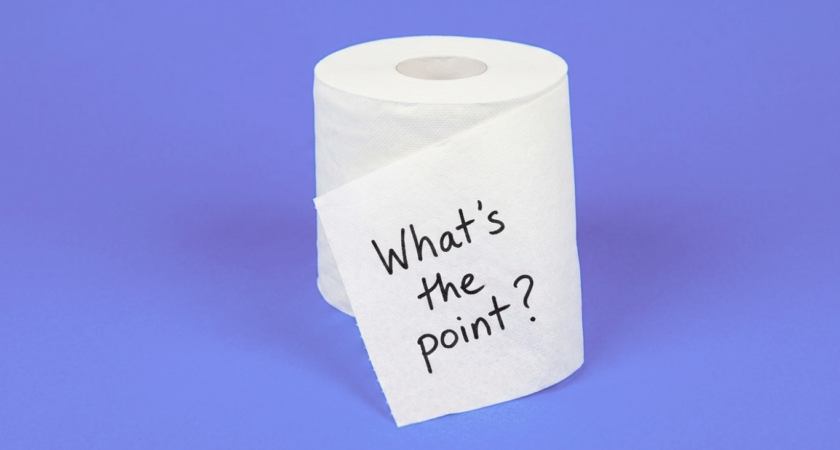
He also named it Who Gives A Crap.
The name itself is a statement of intent. A deliberate refusal to dress purpose up in corporate language. There is no gap between the brand’s values and its decisions because the purpose isn’t a communications strategy. It’s the entire business model. Every roll sold is the proof point. No framing required.
That’s not a purpose statement. That’s a purpose infrastructure.
The executive’s question
The most important shift executives can make right now is to stop treating purpose as a communications decision and start treating it as a business one.
The question isn’t how do we communicate our values? It’s are our decisions consistent with them?
Because your audience isn’t reading your purpose statement. They’re watching your actions. Measuring the gap. And they have every tool they need to share what they find.
The brands that endure are the ones where the purpose statement and the boardroom decisions tell the same story.
Everything else is not worth the toilet paper it’s written on.
Author: Amelia Collins