The best advice we heard recently came from a room full of people navigating things none of us fully saw coming.
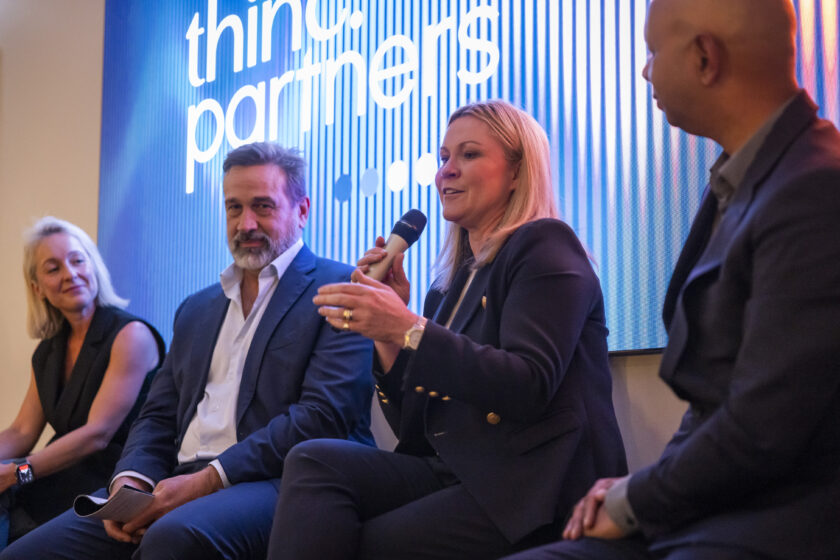
On Tuesday, 28 April Chandran and I hosted our first major industry event — and the public launch of Thinc Partners — at Sanctum Club in Melbourne. We’d invited three leaders we deeply respect to have an honest conversation about reputation, risk and business decisions in uncertain times.
We called it Hold the Line or Pivot?
We didn’t know exactly what they’d say. That was the point.
What followed was one of those rare conversations where the room goes quiet — not because people are being polite, but because they’re genuinely listening. Here’s what stayed with us.
Natalie Placko, General Manager, Global Marketing & Brand – Intrepid Travel
When COVID hit, Intrepid went from hundreds of thousands of travellers to zero. Overnight. In a 30-year history, nothing had come close.
The easy play would have been to chase whoever was still moving and discount hard to survive. Instead, they made a choice most businesses don’t have the courage to make. They leaned into their values and their purpose — telling stories about who they were and what they stood for, even when there was almost no commercial return in doing so. The bet was that customers who connected with the brand at its most vulnerable would still be there when travel came back.
They were.
Natalie said something that we’ve been talking about ever since.
“Brand trust is built in the hard times, not the good times.”
Intrepid just had its strongest year in 37 years. That’s not a coincidence. And with the Middle East situation now weighing on Australian travel confidence again, it’s a lesson they’re drawing on in real time.
Paul Evans, Vice President, Corporate Affairs, Sustainability, Government & Property – Orica
Orica operates across 40 countries. That makes them a kind of proxy for global instability — they feel it before most. Paul was characteristically direct about what that lens is showing right now.
The geopolitical disruption reshaping supply chains, energy markets and trade relationships has hit Australia harder than most of us anticipated. His message was sobering: don’t wait for normal to return. It may not. And if it does, it won’t be quick. We’re talking several cycles before conditions stabilise — and the organisations navigating it best are the ones building optionality now, making decisions where they can, and moving deliberately rather than reactively. Uncertainty, it turns out, creates opportunity for those positioned to act.
His advice about managing through these disruptive times drew the room back to the importance of the people around you.
“Surround yourself with good people,” was Paul’s advice. In a world where our work is becoming more complicated and demands the development of strong relationships, the people in our team have to be up to the task.
Rebecca Humble, CEO – Aurizn
Rebecca spoke about something many Australians may not fully appreciate – the gap between the security challenges our country faces and the broader public understanding of them. And as a leader in the industry at Aurizn, Rebecca has a clear perspective.
She reflected on how increasing global instability is reshaping conversations around national resilience, sovereign capability and the role of Australia’s domestic defence industry.
For decades, Australia has relied heavily on offshore capability and allied supply chains, but there is now a growing recognition of the importance of strengthening local industry, expertise and manufacturing capability here at home.
Rebecca also acknowledged that investment in defence and national security exists alongside other important national priorities- hospitals, schools and housing – which is why building broader public understanding of the sector matters. Beyond security outcomes, she highlighted the wider economic and social contribution defence programs can make through infrastructure, STEM education, advanced manufacturing and regional development.
More personally, Rebecca spoke about the importance of purpose in a career.
She shared that a strong sense of purpose has been a consistent driver throughout her time in the industry and remains something that motivates many people working across the defence and national security sector today.
Three industries. Three very different challenges. But the same thread running through all of it — clarity of purpose, the willingness to hold firm under pressure, and the courage to say the hard thing out loud.
That’s exactly why Thinc Partners exists.
We work with companies and leaders who have something to win or something to lose. If you need to protect, enhance or advance your reputation — that’s our world. And it’s a conversation we’re always glad to have.
To Natalie, Paul and Rebecca — thank you. You gave the room something real.
And to everyone who joined us, thank you for coming along – we’re just getting started.